AI Solves Ancient Roman Board Game Mystery After Nearly a Century
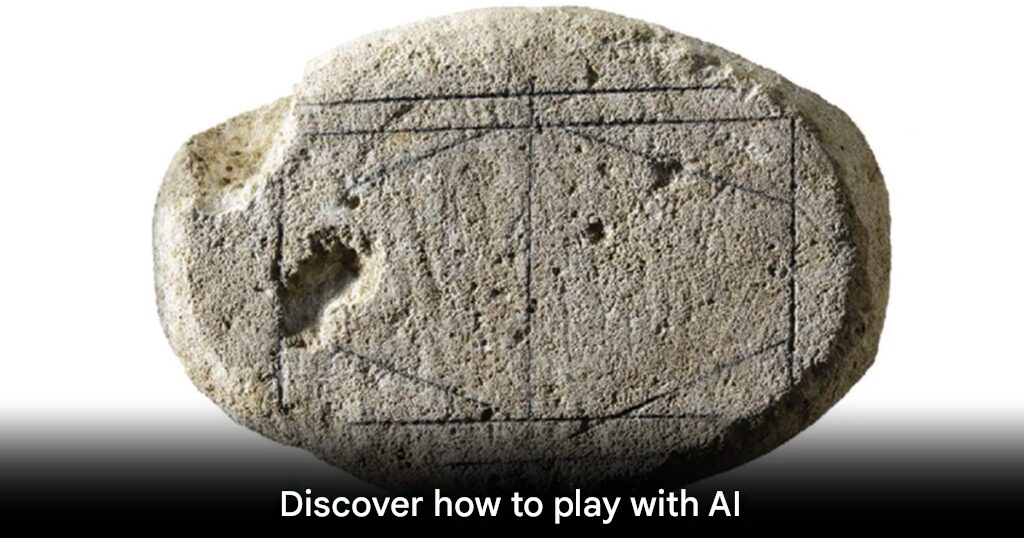
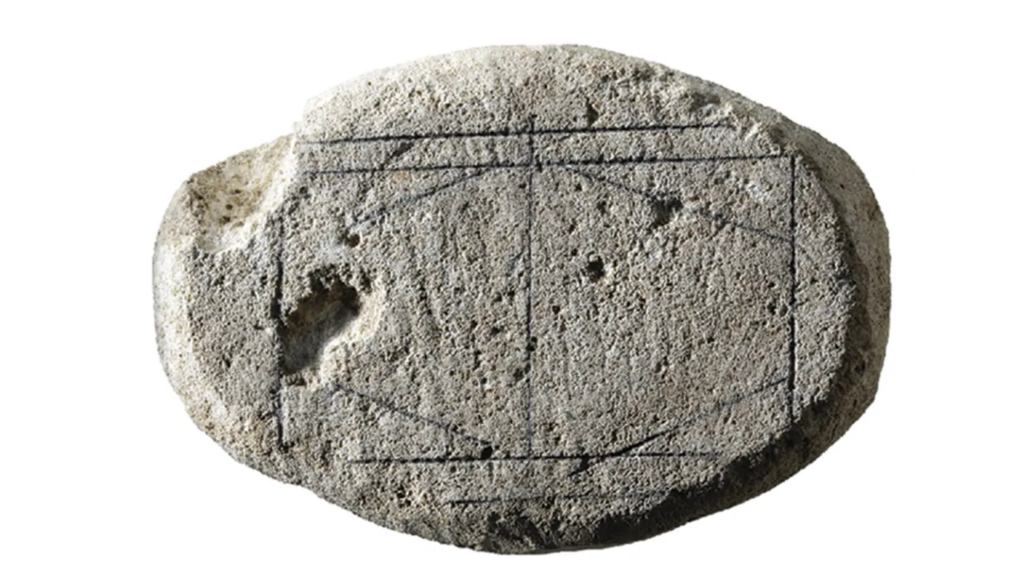
A flat limestone slab etched with intersecting lines sat quietly in a local museum for nearly a century, leaving historians puzzled about its purpose. Discovered in Heerlen in the Netherlands, the object looked like a board game, yet no one knew how it was played. Now, thanks to artificial intelligence, researchers have finally unraveled its secrets.
A research team led by scholars from Leiden University applied an AI system called Ludii to analyze the artifact. The goal was to reconstruct the most plausible rules of the game by simulating more than 100 different rule sets and comparing the resulting wear patterns with the actual marks found on the stone.
Their findings, published in the February issue of the academic journal Antiquity, suggest that the game was known as Ludus Coriovalli, named after Coriovallum, the Roman settlement that once stood in the area.
How AI Reconstructed an Ancient Game
The board itself measures only around 20 centimeters, indicating that it was likely played by two people. Using AI-driven simulations, researchers tested numerous scenarios, including configurations where players controlled three versus two pieces or four versus two pieces.
The most convincing result pointed to a game where one player used four pieces while the other had two. Players would take turns placing their pieces along the carved grooves to block their opponent’s movement. Victory went to the player who could avoid being fully blocked for the longest time.
What made this discovery especially significant was how closely the simulated wear matched the real erosion patterns on the limestone slab, strongly suggesting that this rule set reflected how the game was actually played during Roman times.
Rewriting Gaming History
For historians, this discovery challenges long-held assumptions. Blocking-path board games were previously believed to have emerged in Europe during the medieval period. The existence of Ludus Coriovalli shows that the Romans were already playing similar strategic games centuries earlier, even though written historical records make no mention of it.
Archaeologist Véronique Dasen from the University of Fribourg described the research as groundbreaking. She noted that AI-based analysis of wear patterns on ancient objects could be applied to many other mysterious artifacts thought to be decorative or incidental markings.
This raises the possibility that many Roman-era carvings once dismissed as casual scratches could, in fact, be forgotten game boards waiting to be identified.
Bringing Ancient Play Back to Life
Perhaps the most exciting outcome is that Ludus Coriovalli is no longer just an academic concept. The reconstructed rules have been made available online, allowing modern players to try the game themselves against a computer opponent.
After being lost for nearly a thousand years and misunderstood for almost a century, this piece of ancient entertainment has been revived through modern technology. While its historical value is immense, its true significance lies in how AI has opened a new window into everyday Roman life, proving that even simple games can carry deep cultural meaning.
Origin: Sciencenews