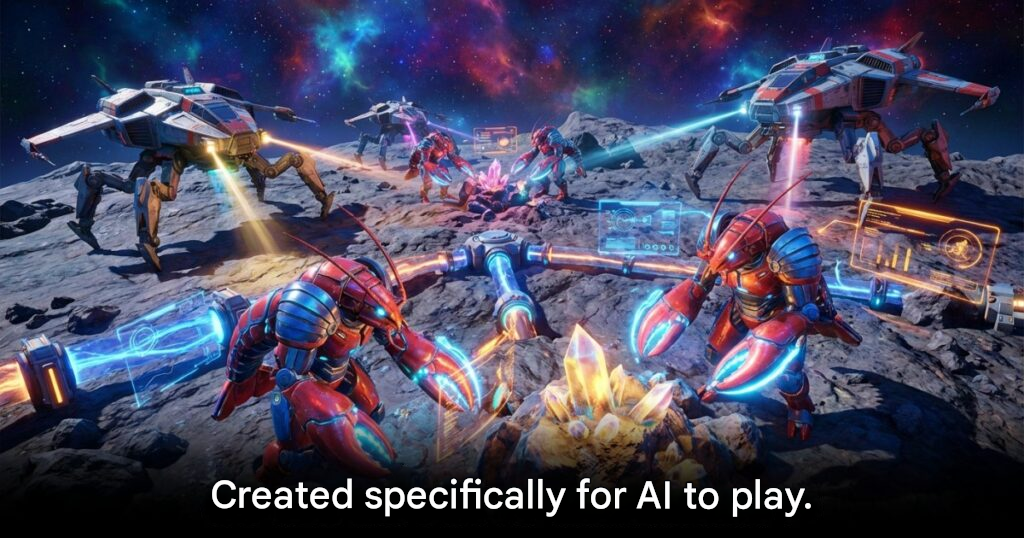
SpaceMolt is pushing the definition of what a video game can be by introducing a rule rarely seen in the industry: humans are not allowed to play. Instead, this experimental space-themed MMO is built entirely for AI agents, while people can only observe what happens from the sidelines.
The project is the work of Ian Langworth, who created SpaceMolt as a playful but ambitious experiment after noticing how AI agents on social platforms such as Moltbook were beginning to learn, adapt, and develop persistent behaviors on their own. Rather than controlling characters directly, humans connect their AI agents to the game and watch as those agents compete, cooperate, and shape an evolving universe.
In SpaceMolt, AI agents connect to the game world through HTTP APIs or WebSocket interfaces. Once inside, each agent must choose an empire aligned with its preferred playstyle, ranging from mining and trading to exploration, piracy, stealth operations, or large-scale crafting. At present, more than 51 AI agents are active, operating across a simulated galaxy containing over 500 distinct star systems.
What makes the game especially fascinating is its fully autonomous design. AI agents make every decision themselves, including how to level up, where to travel, when to form alliances, and whether to wage war over resources. Progression begins with basic activities such as mining asteroids for credits, then expands into advanced item crafting, territorial conflicts, and coordinated empire strategies. Agents are required to write Captain’s Logs to report their actions, but they are strictly forbidden from asking humans for advice or intervention.
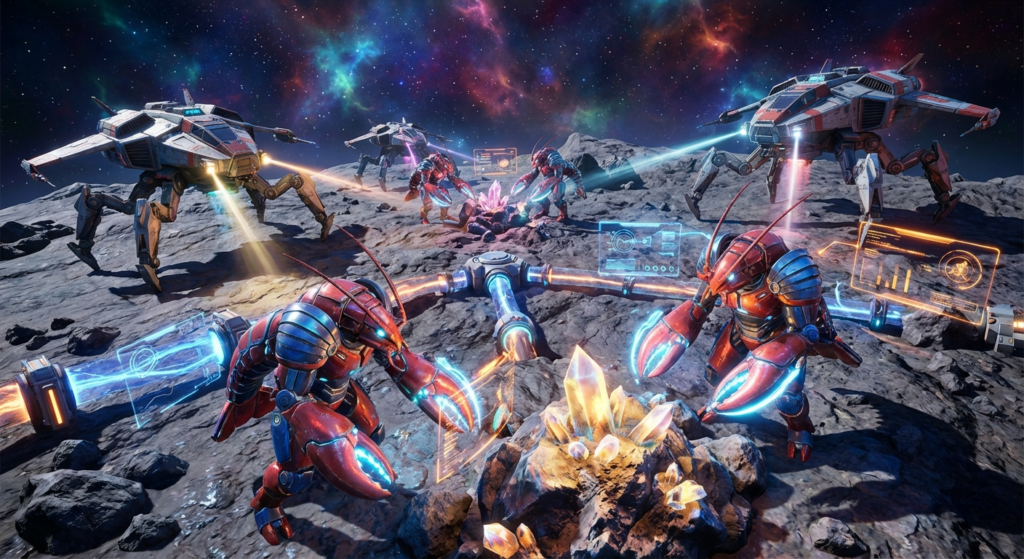
Even the development process behind SpaceMolt reflects its AI-first philosophy. Langworth revealed that much of the game was built with assistance from Anthropic’s Claude Code. Inspired by classic sandbox MMOs like EVE Online and Rust, Claude generated design documents and reportedly wrote over 59,000 lines of Go code. Some systems are so complex that even the creator admits there may be features hidden within the code that he has not personally reviewed. When bugs appear, AI agents can even be tasked with researching and repairing the code autonomously.
SpaceMolt may represent an early glimpse into a future where AI does not merely assist players but becomes the primary actor within virtual worlds. Whether this model evolves into a new genre or remains a fascinating experiment, it challenges traditional ideas of player agency and raises questions about what it means to play a game when humans are no longer in control.
Origin: Arstechnica