10 Guest Characters and Their Origins Across the Soul Calibur Series
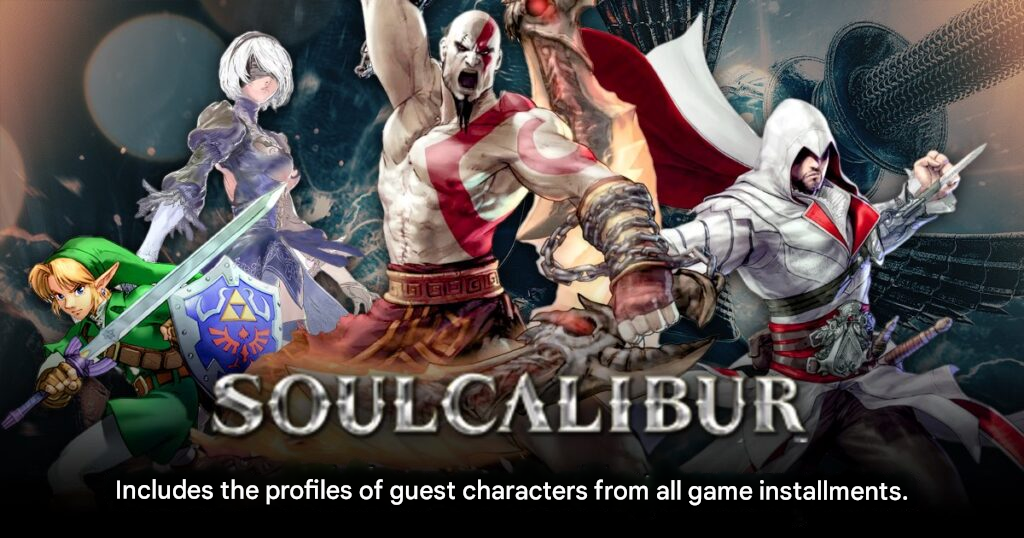
Beyond Tekken, another long-running 3D fighting game that once stood side by side under the same developer banner is Soul Calibur. Unlike traditional hand-to-hand combat, Soul Calibur emphasizes weapon-based battles, agile movement, and fast-paced attacks. Although the series has not seen a new mainline entry for quite some time, one of its most memorable features remains deeply missed guest characters.
Over the years, Soul Calibur has welcomed fighters from across games, movies, comics, and novels, seamlessly weaving them into its lore. Today, we take a retrospective look at 10 guest characters and explore how each of them found their way into the world of Soul Edge and Soul Calibur.
Heihachi Mishima (Tekken) – Soul Calibur II
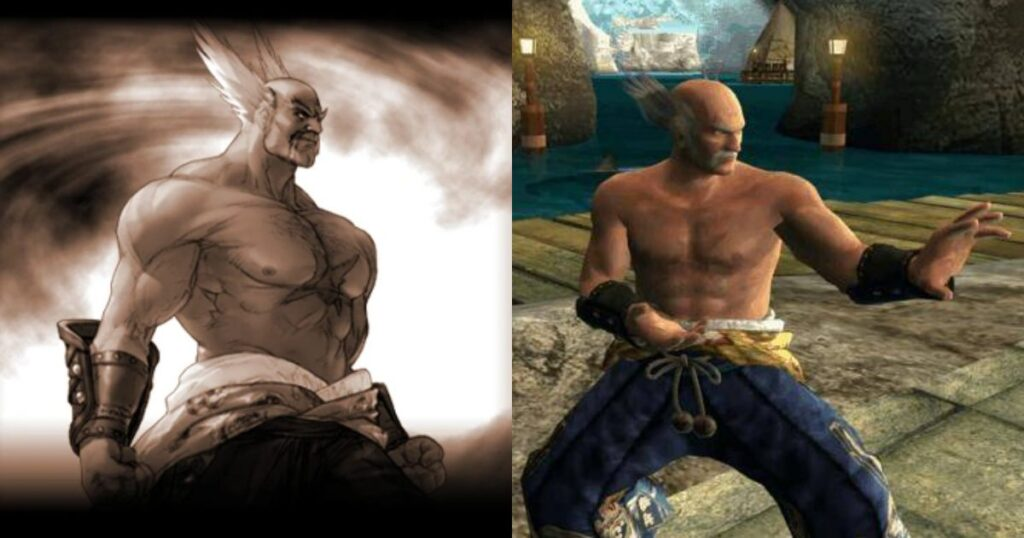
Heihachi’s appearance marked one of the earliest crossover moments in the series, excluding Yoshimitsu who had long been a recurring presence. While training with his pet bear Kuma in the modern era, Heihachi encountered fragments of an ancient sword and was transported back to the 16th century. Surrounded by skilled swordsmen, he chose to remain and fight purely for his own satisfaction. Heihachi was a default character in the PS2 version of Soul Calibur II and later appeared again in the PS3 and Xbox 360 remasters.
Spawn (Spawn Comics) – Soul Calibur II
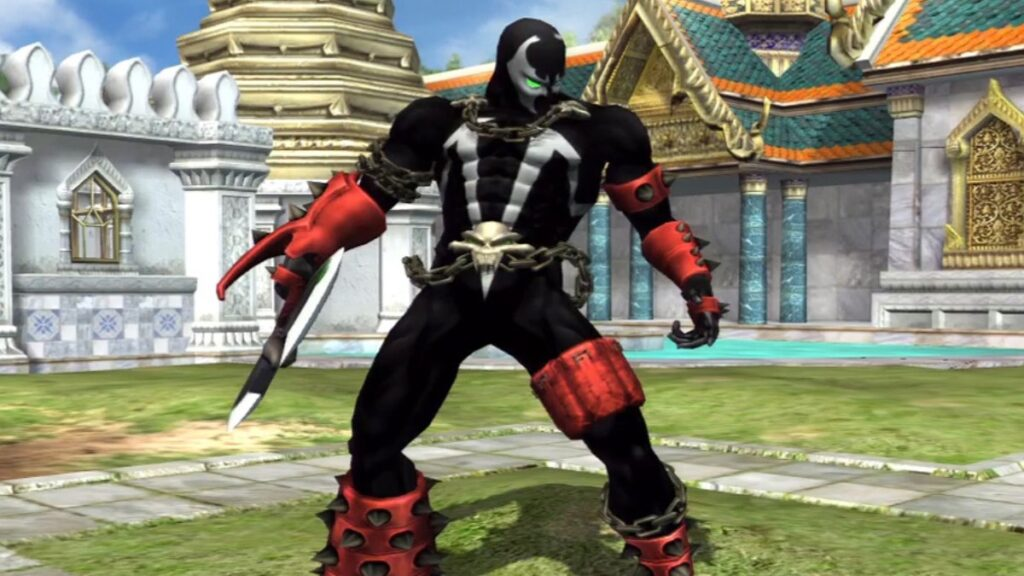
The dark anti-hero Spawn, once a soldier resurrected by a demon lord, fits surprisingly well into the Soul Calibur universe. His storyline exists parallel to the comic canon, acting as a spin-off where Malebolgia sends him back to the 16th century to retrieve Soul Edge. Failure would mean losing any chance to return to the modern world. Spawn was exclusive as a starting character in the Xbox version of Soul Calibur II and later included in the remastered editions.
Link (The Legend of Zelda) – Soul Calibur II
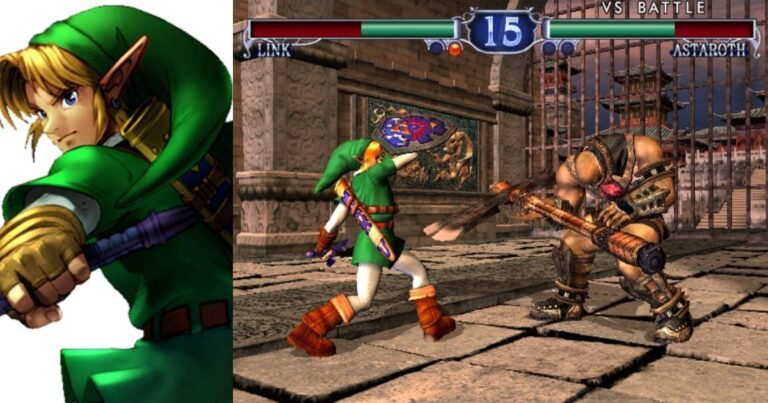
The elven hero from Hyrule was summoned after Princess Zelda sensed a disturbance caused by a rogue sorcerer wielding Soul Edge from another dimension. Link crossed worlds to confront this threat and uncover the sword’s influence. His appearance was exclusive to the GameCube version and did not return in remasters, though it can still be played today via retro services on modern Nintendo platforms.
Darth Vader, Yoda & The Apprentice – Soul Calibur IV
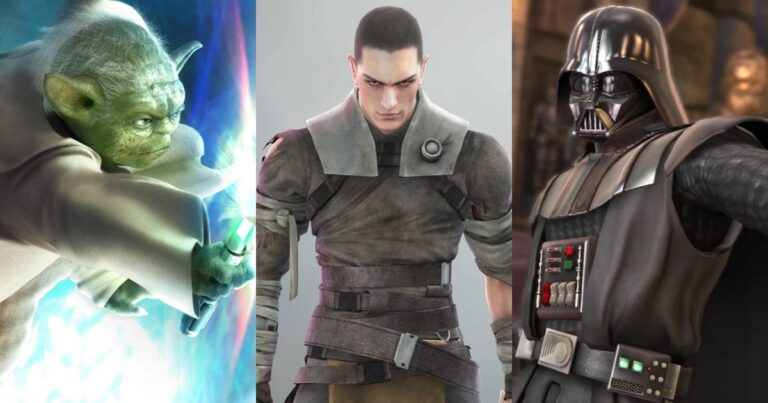
These Star Wars icons arrived with intertwined narratives. Darth Vader sought both Soul Edge and Soul Calibur to further his conquest of the galaxy after learning of them from Algol. Meanwhile, Yoda worked from the shadows to stop him.
The Apprentice, from Star Wars: The Force Unleashed, served as Vader’s disciple and was tasked with investigating the dimensional rift connecting the two worlds.
- Darth Vader: Default character on PlayStation 3
- Yoda: Default character on Xbox 360
- The Apprentice: Unlockable in both versions through gameplay
Later, each platform allowed players to purchase the opposite exclusive character via DLC.
Kratos (God of War) – Soul Calibur: Broken Destiny
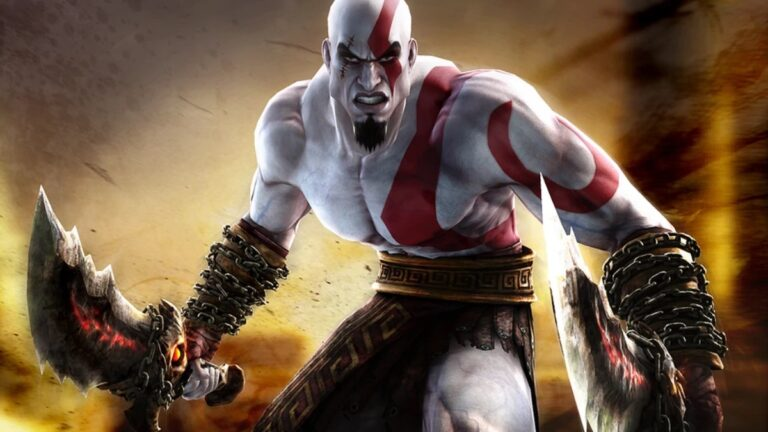
Although non-canon to his main timeline, the Ghost of Sparta made a brutal appearance wielding the Blades of Chaos. Summoned by a mysterious cult, Kratos slaughtered them upon arrival and pursued only one goal—to find Soul Edge and Soul Calibur so he could return to his own world. He had no interest in alliances or the fate of this realm beyond that.
Ezio Auditore (Assassin’s Creed II) – Soul Calibur V
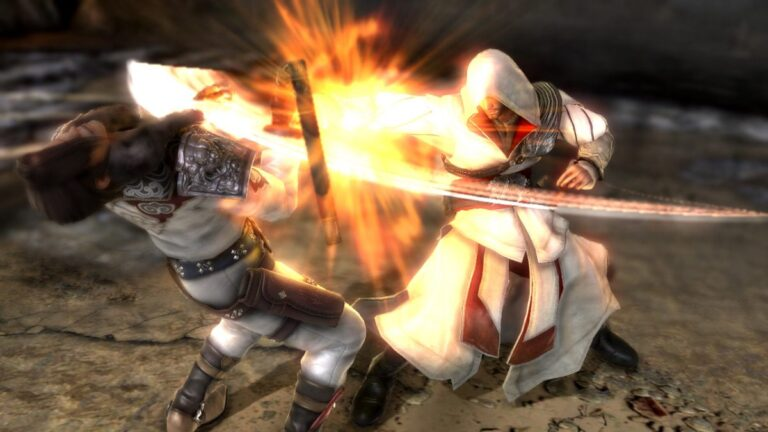
Ezio’s journey resulted from a malfunction within the Animus, sending his data to the late 16th century. Chronologically, this would place him at an impossible age of over 150 years. His story is told entirely through Animus records rather than his own perspective, linking the anomaly directly to the influence of Soul Edge and Soul Calibur.
Geralt of Rivia (The Witcher) – Soul Calibur VI
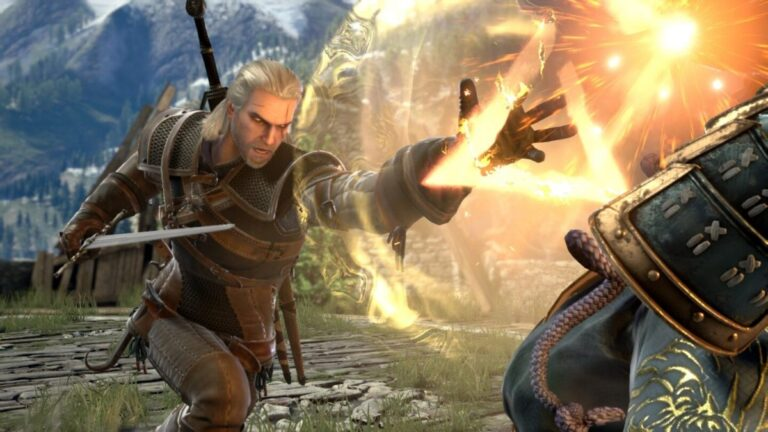
Tasked with investigating a mysterious sorceress, Geralt was instead sent through a dimensional gate to another world. There, he learned of Soul Edge’s corrupting power and trained further under Edge Master, while Zasalamel guided him with insights into time and fate. His presence felt remarkably natural within the game’s dark fantasy tone.
2B (NieR: Automata) – Soul Calibur VI
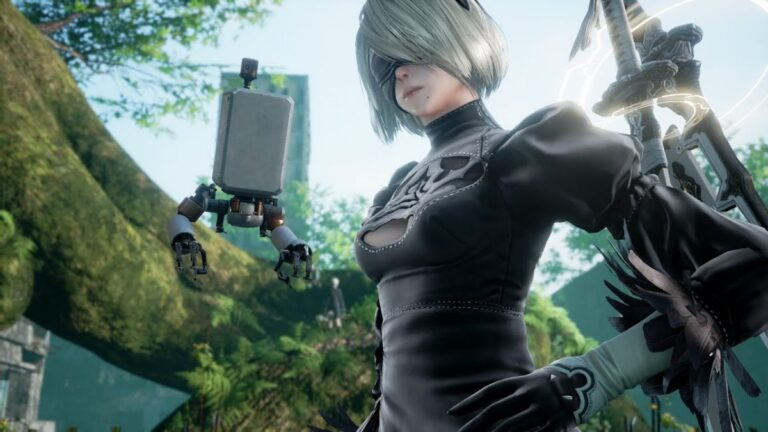
The YoRHa android arrived on a similar mission but quickly discovered this world defied her expectations. Ancient castles, dense forests, and monsters replaced mechanical enemies. Her systems identified Soul Edge as a new form of hostile threat, redefining her mission parameters entirely.
Haohmaru (Samurai Shodown) – Soul Calibur VI
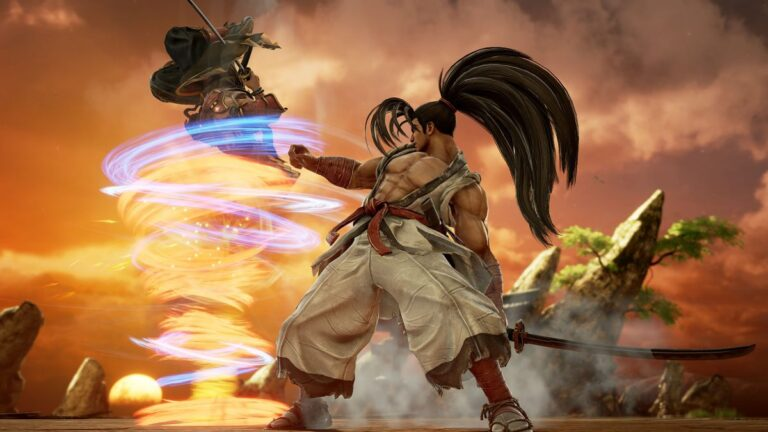
Haohmaru’s arrival was purely accidental. After a battle in his own world, a mysterious voice called out for help, pulling him more than 200 years into the past. That voice belonged to Soul Edge, tempting him to claim it as his own unaware that doing so could lead to unimaginable disaster.
Lloyd Irving (Tales of Symphonia) – Soul Calibur Legends
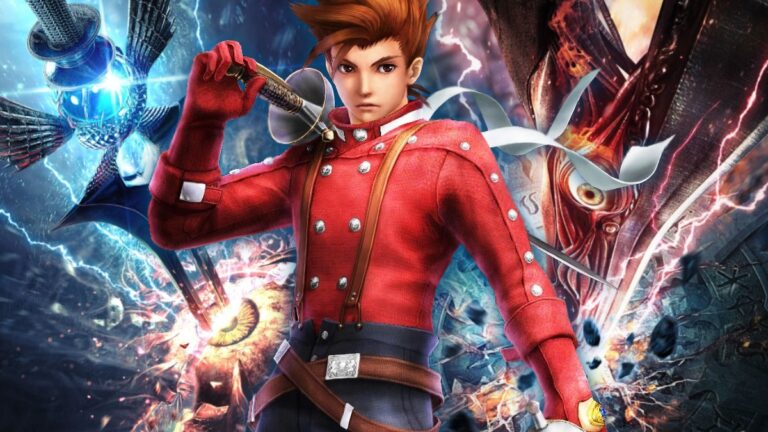
Appearing in the action-adventure spin-off Soul Calibur Legends, Lloyd crossed franchises within Bandai Namco itself. While playable as a main character, the game never explains how he reached this world. Believing Soul Edge to be the key to saving his village, Lloyd’s motivations remain simple yet sincere. He is unlocked naturally through story progression.
The enduring charm of Soul Calibur’s guest characters lies in how thoughtfully each one was adapted to fit the game’s mythos. Despite originating from vastly different worlds and eras, none feel out of place. Their stories respect both their original identities and the dark fantasy tone of Soul Calibur.
For those who have experienced these crossovers firsthand, feel free to share which installment left the strongest impression. And as always, stay tuned with This Is Game SEA for more gaming features and retrospectives.