Clearing the shelves ahead of a major generational shift
Throughout 2025, Apple aggressively reshaped its product lineup, marking one of its most decisive reset years in recent memory. The most noticeable changes happened in the iPhone lineup, where Apple permanently retired the classic iPhone SE and replaced it with the more modern iPhone 16e. At the same time, iPhone 14 and iPhone 15 were quietly removed from official stores to ensure that all remaining models on sale fully support Apple Intelligence. Perhaps the biggest surprise was the complete discontinuation of the Plus variant, clearing the runway for the upcoming iPhone Air line.
The iPad and Apple Watch families also saw significant movement. Apple discontinued the 2022 iPad (A14) and introduced a refreshed base model powered by the A16 chip, offering a noticeable performance uplift. The iPad Air with M2 had an unusually short lifespan, quickly replaced by an M3-powered iPad Air to keep the lineup aligned with Apple’s latest silicon strategy. On the wearables side, Apple retired the Apple Watch Ultra 2, paving the way for Ultra 3, while the Apple Watch SE received its most meaningful upgrade yet with the addition of an Always-On Display, pushing the SE line closer to Pro-level usability for the first time.
While 2025 appeared quieter for Macs on the surface, it was actually a year of major internal transition. Apple phased out older MacBook Air models and standardized the lineup around the M4 chip. The Mac Studio, previously available with M2 Max and M2 Ultra, was discontinued and replaced with configurations featuring M4 Max and M3 Ultra, introduced mid-year. Notably, the entry-level MacBook Pro became the first Mac to adopt the M5 chip, signaling Apple’s preparation for heavier AI-focused workloads expected to dominate in 2026.
Accessories and audio products were not left behind. Apple officially ended sales of AirPods Pro (2nd generation) and replaced them with AirPods Pro 3, introducing built-in heart rate monitoring sensors directly into the earbuds. Alongside health tracking, Apple also improved audio quality and battery life. Meanwhile, MagSafe chargers were upgraded to support the Qi2.2 standard, delivering faster and more efficient wireless charging.
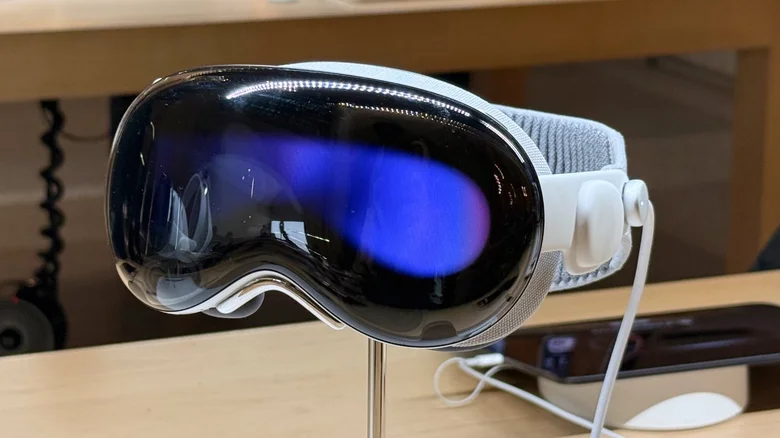
The final and most symbolic change came in the spatial computing category. Apple discontinued the first-generation Apple Vision Pro, replacing it with a new model powered by the M5 chip. While the external design remains largely familiar, internal performance received a substantial boost to support increasingly complex applications. At the same time, Apple continues research into a lighter, more wearable AR-focused device expected to debut in 2026, addressing comfort concerns from early adopters.
This sweeping product reset makes one thing clear: 2026 is shaping up to be a pivotal year for Apple. From the first foldable iPhone and the ultra-thin iPhone Air to a full Mac transition toward M5 and M6 chips, the company is positioning itself for another major leap forward. For consumers considering an upgrade, the decision may come down to timing—because what’s coming next looks set to redefine Apple’s ecosystem once again.
Origin: BGR