Chinese Game Developers Invest Heavily in AI to Reshape the Global Gaming Industry
Chinese Game Developers Invest Heavily in AI to Transform the Global Gaming Industry
The global gaming industry is entering a new phase of transformation as leading Chinese game developers significantly increase their investment in artificial intelligence, aiming to reduce rising development costs and redefine how modern games are produced.
At the start of the year, China-based AI startups Zhipu AI and MiniMax made headlines by becoming the first AI companies in the world to enter the stock market, moving ahead of major US competitors such as OpenAI and Anthropic. While the spotlight often falls on tech giants like Tencent and Alibaba, several major game developers have quietly emerged as key financial backers behind this rapid AI expansion.
Game Publishers Powering China’s AI Growth
Prominent game companies such as miHoYo, the creator of the globally successful Genshin Impact, and 37 Interactive Entertainment have become major supporters of China’s AI ecosystem. miHoYo invested early in MiniMax, while 37 Interactive diversified its investments across Zhipu AI, Moonshot AI, and Baichuan. These companies are often referred to as China’s “four AI tigers,” driven by a shared goal of using advanced technology to offset the rapidly increasing costs of blockbuster game development.
According to Noah Ramos, strategist at Alpine Macro, the gaming industry is searching for solutions as growth slows. Development budgets continue to rise, while consumer purchasing power shows signs of decline. Large language models are therefore viewed not only as financial investments, but also as essential tools for accelerating content creation without dramatically increasing headcount.
Real-World AI Implementation in Game Development
miHoYo began integrating MiniMax’s AI models into Honkai: Star Rail as early as 2023. These tools assist with scriptwriting, narrative design, and the creation of 3D assets. Meanwhile, 37 Interactive has deployed Moonshot AI’s Kimi model within its online customer service systems and uses Zhipu AI’s GLM model to help design in-game storylines, significantly improving workflow efficiency.
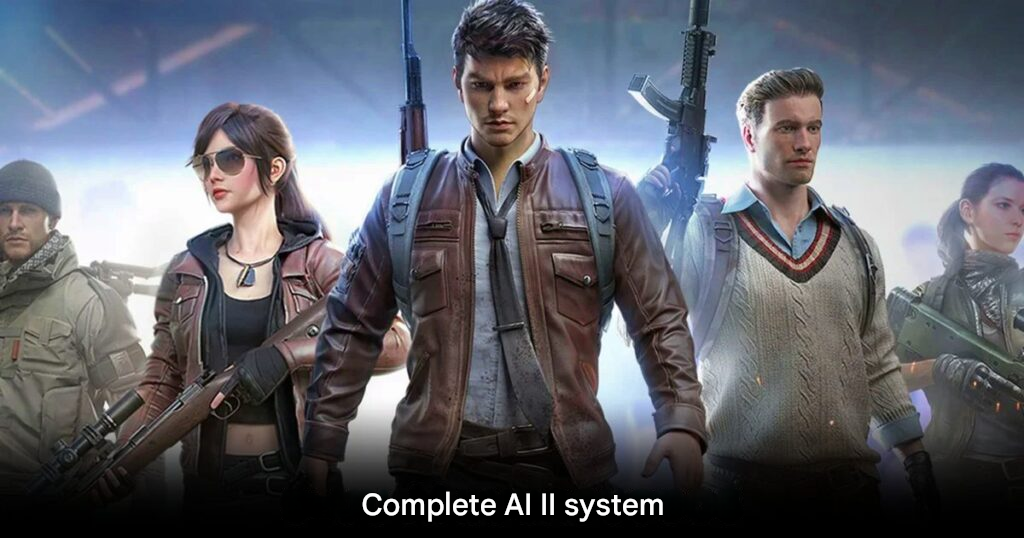
Other major publishers are following a similar path. NetEase partnered with Tripo AI to allow players of Eggy Party to create their own virtual worlds, while Tencent integrated DeepSeek technology into Game for Peace, enabling more natural interactions between players and AI-driven characters. Daniel Ahmad of Niko Partners notes that China and the broader Asian market have adopted AI in game development at a noticeably faster pace than the United States and Europe.
AI as the Core of the Next Gaming Era
This shift signals a move away from experimentation toward full-scale AI implementation across every stage of game production, from development and marketing to player support. When compared to modern console game prices, which average around 70 USD, the real value of games is significantly lower than it was two decades ago. AI has therefore become a critical component in helping both startups and established studios remain competitive and sustainable in today’s economic climate.
As AI continues to mature, Chinese game developers appear determined to lead the industry into a new era, one where creativity and efficiency are powered by large language models at scale.
Source: SCMP