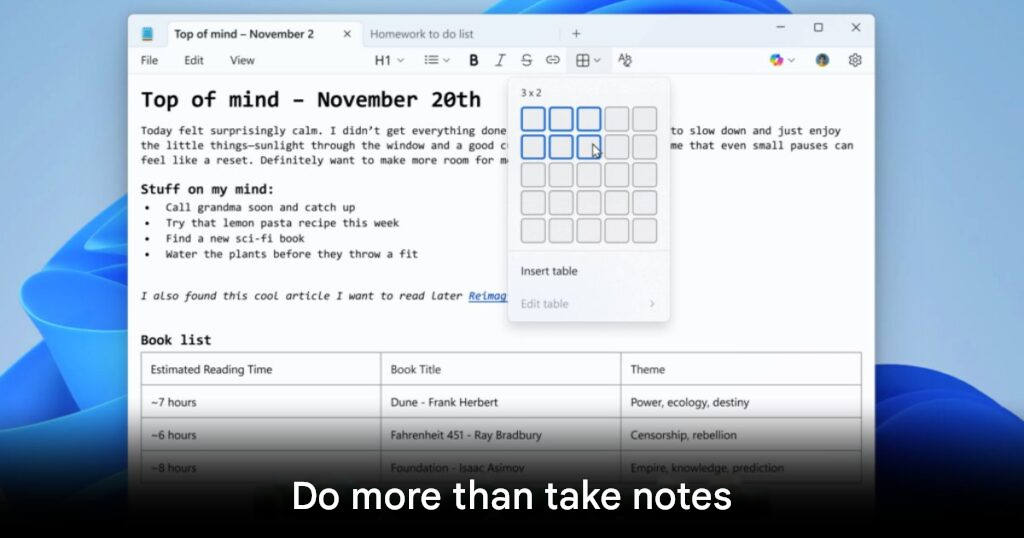
Notepad for Windows 11 is heading into a new era as Microsoft begins testing a wave of modern formatting tools and AI features in version 11.2510.6.0 for Canary and Dev Channel users, sparking a loud debate across the community. Announced through the Windows Insider blog on November 21, 2025, the update includes improvements designed to make Notepad more capable and adaptable for today’s workflows, yet many users feel the move strays too far from the lightweight simplicity that defined the app for decades. The introduction of fully supported tables marks the biggest structural shift, allowing users to insert formatted data directly into documents via the toolbar or Markdown syntax before freely editing rows and columns through either right click menus or toolbar options. This follows earlier enhancements rolled out earlier in the year that added bold, italics, links, headings, and lists which collectively push Notepad closer to a document editor capable of handling structured text without becoming as heavy as Word, giving users more flexibility while keeping things minimally processed on the surface.
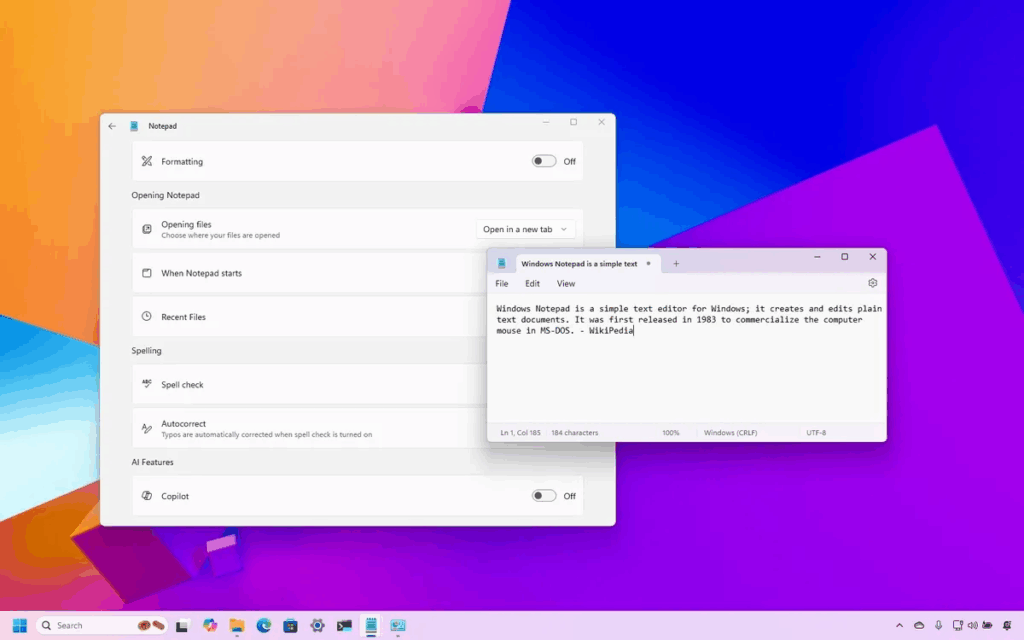
Microsoft is also upgrading Notepad’s AI powered Write, Rewrite, and Summarize tools by introducing streaming output that displays results progressively without requiring users to wait for the entire response to generate. This improvement brings significantly faster responsiveness, especially on Copilot Plus PCs where the NPU handles AI requests locally without subscriptions. Despite this, a substantial portion of the user base remains frustrated at the growing presence of AI within the app, echoing criticism that has existed since these features were introduced in September 2025. The backlash intensified after multiple Reddit threads went viral, with users like chobolicious88 questioning why Notepad cannot remain a lightweight tool as it has always been and expressing concern that bloat is taking over. Another user, FrozeGate, remarked that the app no longer suits quick note taking because AI elements feel intrusive and unnecessary, even joking that WordPad was removed only to slowly migrate its features into Notepad piece by piece.
The wave of negative sentiment reflects a broader AI fatigue spreading through tech communities where many feel companies are forcefully injecting AI into tools that previously thrived on simplicity. Notepad, long praised as a symbol of minimalism since early Windows generations, now stands at the center of this cultural shift. Reports from Windows focused outlets highlight growing worries that additional features may slow the app down or consume more system resources even though Microsoft insists the upgrades enhance performance rather than hinder it. As the debate continues, Microsoft is encouraging Canary and Dev users to provide feedback through the Feedback Hub so improvements can be refined. Those who prefer the classic version of Notepad may need to prepare for the changes ahead or test the new tools themselves to see whether they truly improve real world productivity. Based on the ongoing reactions, it is increasingly clear that the community is reaching its limit with AI overload and is pushing back against a direction that feels less optional and more unavoidable.
THIS IS OUR SAY: Notepad’s evolution shows ambition but risks losing the identity that made it beloved, and unless Microsoft balances innovation with restraint, the simplest tool in Windows history may end up feeling heavier than its purpose ever intended.
Origin: Windowscentral